Standard DeductionThe standard deduction is a dollar amount that reduces the amount of income on which you are taxed. It is a benefit that eliminates the need for many taxpayers to itemize actual deductions. The standard deduction is higher for taxpayers who are age 65 or older or blind. Persons not eligible for the standard deduction. Your standard deduction is zero and you should itemize any deductions you have if:
Higher standard deduction for age 65 or older. You are entitled to a higher standard deduction if you are age 65 or older at the end of the year. You are considered 65 on the day before your 65th birthday. Therefore, you can take the higher standard deduction for 2001 if your 65th birthday was on or before January 1, 2002. Higher standard deduction for blindness. If you are blind on the last day of the year and you do not itemize deductions, you are entitled to a higher standard deduction. You qualify for this benefit if you are totally or partly blind. Partly blind. If you are partly blind, you must get a certified statement from an eye physician or registered optometrist that:
If your eye condition will never improve beyond these limits, the statement should include this fact. You must keep the statement in your records. If your vision can be corrected beyond these limits only by contact lenses that you can wear only briefly because of pain, infection, or ulcers, you can take the higher standard deduction for blindness if you otherwise qualify. Spouse 65 or older or blind. You can take a higher standard deduction if your spouse is age 65 or older or blind and:
Decedents. The amount of the standard deduction for a decedent's final return is the same as it would have been had the decedent continued to live. However, if the decedent was not 65 or older at the time of death, the higher standard deduction for age cannot be claimed.
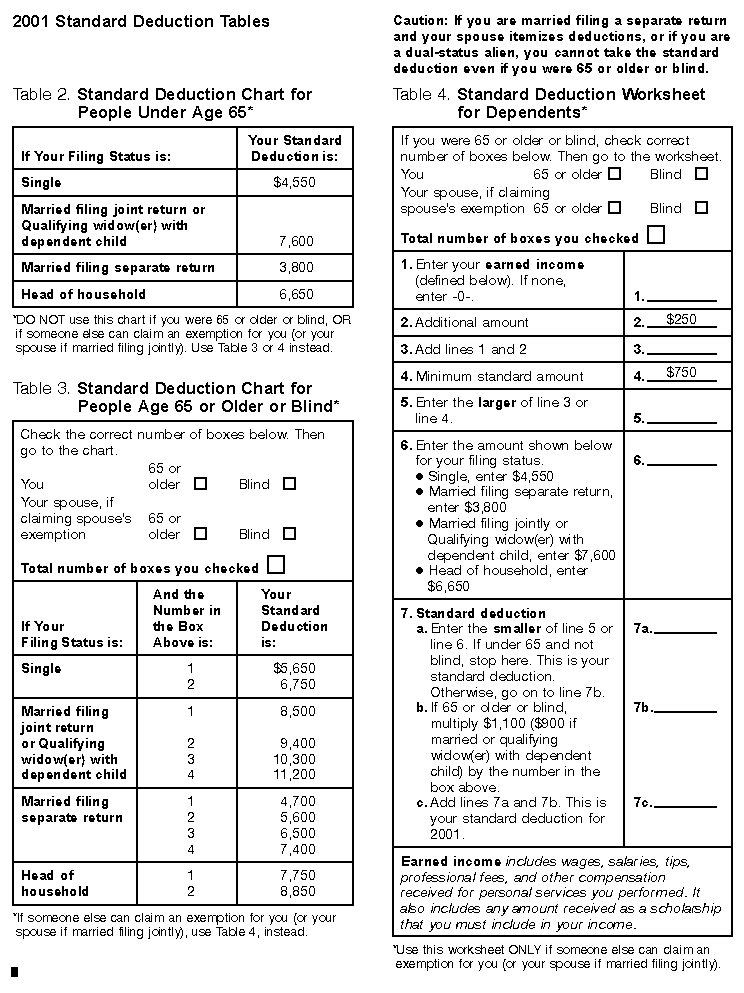
If you are under age 65 and not blind. Use Table 2 in this publication to figure the standard deduction amount you are entitled to. If you are 65 or older or blind. Use Table 3 in this publication to figure the standard deduction amount you are entitled to.
If you decide to take the standard deduction. You can find your standard deduction amount by referring to the 2001 Standard Deduction Tables, later, that fit your circumstances. Example 1. Larry, 66, and Donna, 67, are filing a joint return for 2001. Neither is blind. They decide not to itemize their deductions. They use Table 3. Their standard deduction is $9,400. Example 2. Assume the same facts as in Example 1 except that Larry is blind at the end of 2001. They use Table 3. Larry and Donna's standard deduction is $10,300. Example 3. Susan, 67, who is blind, qualifies as head of household in 2001. She has no itemized deductions. She uses Table 3. Her standard deduction is $8,850. Standard Deduction for DependentsThe standard deduction for an individual for whom an exemption can be claimed on another person's tax return is generally limited to the greater of:
|
 You cannot claim the higher standard deduction for an individual other than yourself and your spouse.